





L-호모세린 담수화 및 정제 공정 사례
L-호모세린은 식품, 건강 관리 제품, 화장품, 바이오 의약품 및 기타 관련 산업 분야에서 중요한 아미노산 원료로 널리 사용되는 아미노산입니다.
담수화 및 L-호모세린 불순물 제거:
_1698302462_WNo_600d329.webp "Desalination and removing impurities of L-homoserine")
L-호모세린 추출 및 제조 과정에서 불순물이 종종 공정을 방해하여 원하는 순도를 얻기 어렵게 만듭니다. 따라서 L-호모세린의 추출 및 제조 과정에서 순도를 향상시키기 위해서는 탈염 및 불순물 제거 공정이 필수적입니다. 현재 L-호모세린 생산에서 주로 사용되는 탈염 및 불순물 제거 방법은 다음과 같습니다.
1) 원심분리:
원심분리는 L-호모세린 생산 과정에서 불순물을 제거하는 데 널리 사용되는 방법입니다. 이 과정은 원심분리를 통해 발효액을 농축하고 유기상을 분리하여 분리 및 정제하는 것을 포함합니다. 원심분리는 발효액에 존재하는 단백질, 탄수화물 및 기타 불순물을 효과적으로 제거할 수 있는 매우 효율적인 생산 공정입니다.
2) 산 침전법:
L-호모세린 생산 과정에서 불순물 제거에 흔히 사용되는 또 다른 방법은 산 침전법입니다. 이 방법은 산성 용액을 첨가하여 발효액에서 단백질을 침전시켜 제거하는 것입니다. 산 침전법은 단백질 함량이 높은 발효액에 특히 효과적인데, 침전 후 원심분리를 통해 단백질을 쉽게 제거할 수 있기 때문입니다. 이후 원심분리 또는 크로마토그래피와 같은 추가적인 방법을 통해 L-호모세린을 더욱 정제할 수 있습니다.
3) 수지 흡착법:
수지 흡착법은 고품질 L-호모세린 생산에 흔히 사용되는 또 다른 기술입니다. 이 방법은 이온 교환 수지와 같은 물질을 사용하여 L-호모세린을 선택적으로 흡착하고 불순물을 제거하는 방식입니다. 수지 흡착법은 높은 효율성, 빠른 반응 속도, 우수한 선택성 등 여러 장점을 제공합니다.
4) 크로마토그래피 분리 기술:
크로마토그래피 분리 기술은 L-호모세린 공급 용액에서 무기염, 색소 및 기타 불순물을 제거하는 데 사용됩니다. 분리된 추출물은 정제 수지를 통해 오염 물질을 제거하고, 정제된 L-호모세린은 전체 라인의 수율과 L-호모세린 제품의 품질을 향상시키기 위해 공정 후반 단계에 투입됩니다.
크로마토그래피를 이용한 L-호모세린 정제 실험 사례:
1) 실험의 목적:
Chromatography technology has been successfully applied in the production of various amino acid-related products. In this case, a customer has sent a 3000L L-homoserine membrane clear liquid to our company to conduct a chromatography pilot debugging experiment. The primary objective of this experiment is to evaluate the separation performance of Sunresin's resin and to study the process performance of SSMB chromatography in the separation and purification of L-homoserine.
2)Experimental Feedstock:
For this experiment, the L-homoserine fermentation broth was filtered to achieve 18% solid holdup, a pH of 6.8, and a conductivity of 10320 μs/cm. The resulting filtrate was then used as the feedstock for the chromatography process. The feedstock was analyzed as follows:
| L-homoserine Feedstock | |
|---|---|
| Analysis Item | L-L-homoserine |
| Appearance | Red brown |
| Solid Holdup(%) | 18 |
| Density(g/ml) | 1.06 |
| pH | 6.55 |
| Conductivity | 10320 |
| L-homoserine Acidity(%) | 10-10.5 |
3)Chromatographic separation experimental effect:
Through the continuous optimization and adjustment of chromatographic production debugging, the specific performance of chromatography is as follows:
| SSMB chromatographic separation performance data | ||
|---|---|---|
| Analysis Item | Extracting Solution | Residual liquid |
| Appearance | clear, yellow | clear, reddish-brown |
| L-homoserine yield coefficient(%) | 94-96 | - |
| L-homoserine purity(%) | 90-92 | - |
4)Experimental summary:
Based on the chromatographic pilot experiment with loading Sunresin’s resin, the following conclusions can be drawn:
-Under the current feed conditions, maintaining very low water consumption, the pilot test can obtain a good separation of L-homoserine from solid analytical yield of more than 95%, purity of more than 90%, and removal of other impurities;
-With the second optimization of parameters, the pigment of the extract was reduced from red to light yellow, and the decolorization effect was significantly improved.
Sunresin SSMB choromatagraphic separation equipment:
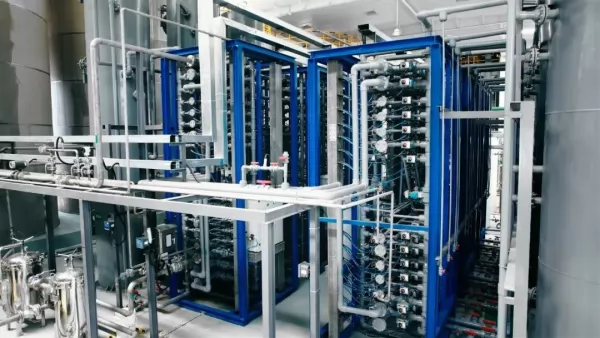
For the high salt problem prevailing in the current fermentation broth, Sunresin has developed SSMB continuous chromatography salt separation process and continuous ion exchange process by combining the characteristics of the broth.
Chromatographic separation principle:
The purpose of chromatography is to separate the feed material into two parts.
-the product phase, which contains the L-homoserine component with high recovery and high content;
-the impurity phase, which contains a very small amount of the target component and a large proportion of salts, pigments and other impurities;
이 공정은 순차적 모의 이동층 크로마토그래피 시스템이라고 불리는 연속 크로마토그래피 시스템입니다. 이 시스템은 수지로 채워진 분리 챔버가 여러 개 연속적으로 배열된 형태로 구성되어 있으며, 각 챔버의 입구와 출구가 주기적으로 교대하여 수지층의 움직임을 모사하기 때문에 "순차적 모의 이동층"이라고 합니다.
크로마토그래피 충전재는 각 성분에 대해 서로 다른 결합/친화성을 가진 균질한 수지입니다.
크로마토그래피 분리 장치의 장점:
SSMB의 장점은 분명합니다.
-지속적이고 원활한 공급/배출로 시스템의 안정성과 신뢰성을 보장합니다.
-고순도 성분을 얻을 수 있습니다.
- 연속 시스템은 배치 공정에 비해 분리된 제품 단위당 물 소비량과 수지 사용량이 적습니다. 이는 시스템에 제거, 혼합 및 재공급해야 할 중간 구성 요소가 없기 때문입니다.
-기존의 이온 교환 방식과 비교했을 때, 화학 물질을 거의 사용하지 않아 환경 친화적입니다.
시스템의 최적 성능을 달성하기 위해, 시스템의 자동 제어를 통해 크로마토그래피 분리 컬럼의 각 영역을 통과하는 유속을 정밀하게 제어하고, 다양한 공정 단계를 자동으로 정확하게 전환할 수 있습니다.
문의하기


