





선레진 —비이온성 조영제의 담수화 및 정제 공정
Contrast media are chemical compounds used in medical imaging. They are typicall administered by injection in the human body. These organic media have higher or lower density compared to the surrounding tissues, thus allowing the contrast to be visualized by imaging devices. For example, iodine preparations and barium sulfate are commonly used for X-ray observation.
Contrast media are primarily employed for visualizing blood vessels and body cavities and are common used agents in interventional radiology. There are two types on of contract media: non-ionic and ionic. Non-ionic contrast media, due to their lower toxic side effects, are widely preferred and commonly used in angiography and transvascular contrast examinations.
Desalination and Purification in Nonionic Contrast Media Production:
In order to ensure the production of high-purity final products, desalination and purification play a critical role in the manufacturing process of non-ionic contrast media. These steps are essential for the removal of salinity, impurities, organic residues, trace metal ions, and solid impurities. By effectively eliminating these contaminants, the desalination and purification processes contribute to enhance the purity and quality of the contrast media. Furthermore, this specific purification procedure helps to reduce adverse reactions and side effects on patients during subsequent applications.
Furthermore, desalination and purification processes ensure that non-ionic contrast media meet the requirements set by international pharmacopoeias and drug regulatory agencies. This mandatory purification ensures an improved quality, safety and medicinal properties of the contrast media, thereby reducing the likelihood of adverse reactions.
Common Processes for Desalination and Purification:
Various methods can be used to achieve desalination and purification in the production of contrast media. The selection of these methods depends on the type, composition, and production requirements of the contrast media. The commonly used processes include:
1. Membrane Filtration: Membrane filtration utilizes separation technology to remove solid particles, impurities, macromolecules, suspended matter, and microorganisms from the solution. Different types of membranes, such as reverse osmosis, ultrafiltration, and microfiltration membranes, can be chosen based on the desired desalination effect.
2. Reverse Osmosis: Reverse osmosis is a desalination technique that separates solutes and solvents in a solution through a semi-permeable membrane. High pressure is applied to drive the solvent through the membrane, while ions and impurities in the solute and solvent are retained, effectively removing salts and other solutes from the solution.
3. 이온 교환법: 이온 교환은 널리 사용되는 담수화 및 정화 방법입니다. 이 방법은 이온 교환 능력을 가진 수지 또는 겔 소재를 사용하여 용액 내 이온을 선택적으로 흡착 및 방출함으로써 염분 및 기타 불순물을 제거하는 것입니다. 이온 교환법은 요구 사항에 따라 양이온 교환 또는 음이온 교환으로 맞춤 설정할 수 있습니다.
4. 크로마토그래피 탈염 공정: 크로마토그래피 분리 기술을 이용하여 공급 용액에서 무기염, 색소 및 기타 불순물을 제거합니다. 분리된 추출물은 정제 수지를 사용하여 추가로 정제하여 효과를 보장합니다.
적용 사례: 아이오딕사놀 정제
아이오딕사놀 정제: 이 정제 공정은 선레진(Sunresin)에서 개발했습니다. 초기 단계에서 수많은 실험실 실험과 시범 테스트를 거친 후, 세플라이프(Seplife)는 다음과 같은 결과를 얻었습니다. ®로딩에는 LX 시리즈 크로마토그래피 수지가 선택되었습니다. 분리 과정에는 DAC1000 산업용 분취 크로마토그래피 시스템이 사용되었습니다.
최적화 및 공정 디버깅을 통해 크로마토그래피 시스템은 자동 모드에서 90% 이상의 수율과 99.8% 이상의 순도를 달성했습니다. 생산 과정에서 얻은 결과는 실험실 실험 결과와 일치했습니다. DAC1000 산업용 크로마토그래피 장비는 수동 모드와 자동 모드 간 전환이 가능하여 고객의 특정 생산 요구에 맞춰 사용할 수 있는 유연성을 제공합니다.
DAC 산업용 준비 크로마토그래피:
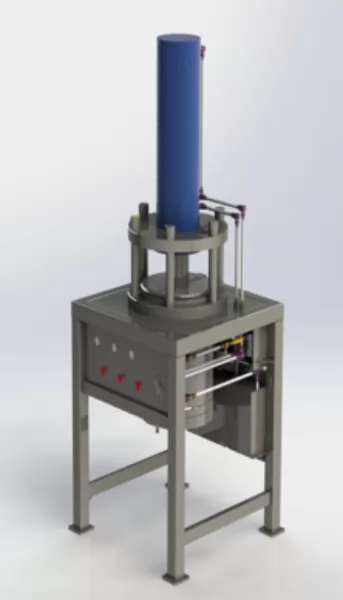
DAC 분취 크로마토그래피는 효율적인 시료 분리 기술입니다. 이 기술은 동적 축압축(DAC) 컬럼을 사용하여 분리 과정에서 이론 단수를 높이고 피크 폭을 좁힙니다. 이는 분리 효율과 피크 용량을 향상시킵니다. Sunresin 크로마토그래피 분리 수지와 함께 사용하면 탁월한 분리 결과를 제공하며 복잡한 혼합물도 효과적으로 분리할 수 있습니다.
크로마토그래피 분리 장비의 장점:
1. 빠른 분리: DAC 기술은 빠른 분리 측면에서 뚜렷한 이점을 제공합니다. DAC 시스템 내의 압축 제약을 활용함으로써 분리 컬럼의 길이를 크게 줄일 수 있습니다. 따라서 DAC 컬럼은 기존 크로마토그래피 컬럼에 비해 훨씬 짧은 시간 내에 분리 과정을 완료할 수 있습니다. 결과적으로 분석 효율과 시료 처리량이 향상됩니다.
2. 폭넓은 시료 적응성: DAC 기술은 다양한 화합물 및 수지에 탁월한 적응성을 보입니다. DAC 컬럼은 다양한 종류의 충전재로 충전할 수 있어 분자량이 다른 화합물의 분리는 물론 액체 및 고체상 분리에도 적합합니다. 이러한 다재다능함 덕분에 다양한 분석 환경에서 활용할 수 있습니다.
3. 시료 소모량 감소: DAC 기술은 높은 분리 효율과 낮은 시료 소모량을 효과적으로 결합합니다. DAC 컬럼이 제공하는 탁월한 분리 효율과 피크 용량 덕분에 필요한 시료량을 크게 줄일 수 있습니다. 이 특징은 특히 확보가 어렵거나 가격이 높은 화합물을 분석할 때 매우 유용합니다.
4. 높은 안정성 및 재현성: DAC 컬럼은 탁월한 안정성과 재현성을 보여줍니다. DAC 시스템 내의 축 방향 압축력은 컬럼의 쌓임 현상과 편심을 최소화하여 컬럼 안정성과 분리 재현성을 향상시킵니다. 결과적으로 더욱 신뢰할 수 있고 일관된 결과를 얻을 수 있습니다.
문의하기


